Hello everybody! How is your year going?
I'm so proud that I've kept going on crochet! I usually would have given up on something that I didn't quite understand by now... but guess what? When you stick with something, you eventually leave confusion behind and cross over the border into understanding.
Now, I know tons of you are already avid crocheters/knitters. This post probably won't be terribly helpful to you, but I wanted to post some things for the beginners out there while it is still fresh in my mind.
Bear with me, at least two of these may sound like ridiculous problems. But I know I can't be the only one who struggled with them, so here are my tips (in no particular order)!
Front, Back, or Both Loops?
I laugh at myself now, but when I first started I really didn't know where to put my stitches.
Do I go in just the front "string?" Just the back? Through both? I swear to you, I could not find the answer to this anywhere for at least a week. Now, of course, I see it in every video or picture I come across, but I tell you they weren't there when I needed them!
So, the answer is: go wherever you want!
But really, the default way is to go in through both loops, as in the picture above. Going in through only one loop, however, creates some texture on your finished piece as that stitch is forced to the front or back just a little bit. So feel free to experiment!
How to Hold the Yarn?
I looked at so many videos, trying to copy how the "hookers" held their yarn. And each way just felt too weird. Of course, so did my way, as I had the yarn wrapped up and over each finger on my hand. (I must have looked like a dork)
Just keep it simple, get some inspiration from others if you need it, but ultimately go with what feels comfortable. There isn't a wrong way, as long as the yarn gets to move when it needs to.
Practice Yarn
I read on several websites that you should start with acrylic yarn in a worsted weight, and a solid, light colour that is easy to see.
I agree with most of that statement, except for the solid colour. When you are first learning, nothing is harder than differentiating between the stitches you should be going into next and the stitches that you already did/need to be ignoring. So what do I recommend?
A yarn that is solid, with several flecks of colour added in. Here's an example (that doesn't show up well here):
I recommend this because it is SO nice to have those little colour markers. I just started using this for a project (a couple months after I began crocheting), and only now am I realizing where each part of my completed stitches come from. I can look at my double crochet stitch as I'm creating it and see:
"Oh, of my three loops, the middle one is coloured purple. And when I finish the stitch, that purple loop ends up on the right side in the body of the stitch."
And when the top of your evil turning chain just happens to be glowing bright blue? Man, will you be grateful you used this yarn.
One more thing; even though this yarn is not acrylic, I think it works perfectly well as a starting yarn. Cotton does stick just a little to the crochet hook (whether you use aluminum or wood), but not that much. As a bonus, this yarn very rarely splits on you, and splitting is (or was for me) a big problem when you are first starting out. Okay, so that was two more things.
Roll your Yarn into a Ball
Don't be fooled by the pretty little ovals or oblong skeins that yarn comes in; that is for display only. Crocheting from those will work kind of fine at first, but they are not sustainable shapes and your yarn will eventually fall apart and dance its way into one big knot when you aren't looking. Plus, as a ball the yarn takes up much less space.
Just take the time to roll each yarn into a ball. Don't try to get all fancy here like I did once again (I just love to complicate things), just take one end and start curling and rolling it into itself until it begins to form a ball. And then keep wrapping until you reach the other end. Done!
There are some tutorials out there on how to roll your yarn into different kinds of useful balls, but I haven't tried any of them just yet. Instead, I just roll a normal ball that fits perfectly into...
Where to Put the Active Yarn?
...a teapot!
That's right, I work out of a teapot. You may have seen this floating around Pinterest already, as it is simply a brilliant idea. It's so nice for on-the-go crocheting, as it keeps the yarn in one place. No more yarn balls bouncing around the bowling alley for me!
In addition to being a great container, the teapot is also a great conversation starter (if you're into that sort of thing). I've had tons of people come up and ask me what in the world I am doing. What is NOT okay is when they grab the teapot and open it to see what's inside. Don't touch my teapot, punks.
The Best Information Center
Way too long after I started crocheting, Pinterest brought me to this free crochet "school." It's just a girl on her blog, giving the best tutorials for beginners ever!
I really wish I had followed this when it was actually going on, but alas; it was more than a year ago. Ah well. It's still perfectly enjoyable, detailed, and helpful.
Ravelry
This free site is great on so many different levels. Right now I mainly use it for free patterns and to keep track of my yarn. Ravelry has a little "notebook" where you can enter information on all of your yarn, hooks, projects, patterns, whatever, and upload pictures for each one. Missing a yarn label and can't remember what it said? Just find that yarn in your Ravelry Notebook!
The website is also a great place to join like-minded groups for both crocheting and knitting, and if you are lucky you will even find a local group that meets in your town.
I could go into tons more detail here, but that would take too long and I'm really starting to sound like an advertisement. You should just go explore Ravelry yourself and see how it can help you.
That Doesn't Look Right...
The first thing I ever crocheted (aside from practice circles, swatches, and chains) was a cupcake hat. And let me tell you; it took absolutely forever to resemble any kind of edible or wearable item.
What I mean is; don't worry if your project, or even your stitches, look wrong at first. Chances are, after maybe 5 to 10 rows or so, you'll start to see it/them transform into the beautiful creation you always knew it/they could be.
If that doesn't happen... well maybe you are doing it wrong.
That's the End
Okay, I think those are all the major pitfalls I had when starting crochet. Although I'm sure I'll remember some more as soon as I go to bed tonight (I only just added the Ravelry one in at the last minute).
If you have any problems that you want me to address, just let me know and I'll edit them in! Or, if you want to tell me about how you overcame those problems, feel encouraged to do that as well!
Thursday, January 24, 2013
Friday, November 30, 2012
Magnetic To-Do List with Chalkboard Tasks
So last time we talked about the amazing things people are doing with chalkboard paint, and how to make your own for cheap. Now I shall share with you the project that I had in mind for those little chalkboard buttons I made.
The Need
I've been very busy lately, and it has predictably made me forget about some important things I had responsibility for. I can't stand when that happens, and so from this need arose a great idea (eventually)!
First I tried making a simple to-do board, the type where you put paint sample cards inside a frame and use a dry erase marker on the glass. (my inspiration for that came from ImperfectHomeMaking, here)
Effective and cute, but just not fun enough for me. I didn't just love looking at all the tasks I had to do.
I needed something even better!
Idea
So about a month ago, I had a vague idea of a to-do board that I would love to create. It basically combined two ideas I've seen on Pinterest; magnetic makeup boards and chalkboard paint.
Finally a couple weeks ago I fleshed it out on paper, and got straight to work!
Now bear with me as I share my dark pictures with you (my mom's house does not exactly have picture-quality lighting.)
Steps
Here is a little far away look at the finished project... remember to imagine it in much more vivid colours than the picture shows, even though this part is mostly grey.
Step 1. Buy Supplies
This was done over the course of several days, as I wasn't sure all at once which colours I wanted. But, I ended up with:
Everything is from Michael's unless it says otherwise, because Michael's understands me and my needs.
Step 2. Cut the Metal Board
The metal sheet I bought was just about an inch too large for my frame, so I had to cut it down. Not something I was looking forward to, but luckily my Dad had a large clipper that I'm told was made for this job. So after only some minor hassel, I had snipped my sheet down to size, never ceasing to be amazed at how strong those clippers were.
Step 3. Cut Shapes to be Painted
I wanted to end up with squares, not the rectangles I had to buy. And so, I used the metal clippers! Wow. Once again, they made my job so easy. After just a few minutes, I had lots of mostly-straight squares, plus a few smaller rectangles that I needed.
Step 4. Paint Shapes
For all this excitement, see previous post.
Step 5. Magnets
As I was in the store looking at magnets, I was disappointed at how much they cost for even a small pack of 50. But wait! Those 50 circles, although small, were much larger than I needed. So I bought them and snipped them in half with my magic clippers. Hooray! 100 magnets for the price of 50.
I had to attach the magnets, so then it came time to open my new purple hot glue gun. Man I hate those hard plastic packages they come in... metal clippers to the rescue, hooray!
After all this snippy clipper fun, I chose the ugliest side of each button, and hot glued on a magnet.
Step 6. Attaching the Fabric
This step was easy enough. I just pulled the fabric tight on the metal board, and hot glued the edges to the back. Nothing too exciting there.
Step 7. Attaching the Ribbon Dividers
As you saw in the picture above, I decided to use ribbon as a divider between days.
I practiced first with some yarn I had lying around, arranging and rearranging until I was sure of the placement I wanted.
Then I cut each ribbon one at a time, attaching as I went. Each ribbon has its ends hot glued to the back of the board.
I had some trouble keeping them straight as I flipped the board around to glue them. It took until my second-to-last one for me to discover that it is easiest if you just quickly stick a piece of temporary tape on one end. Duh.
Step 8. Paint the Border
Again, another easy step. I layed down some newspaper and painted the board, waited for it to dry, and painted the other side. And of course, got absolutely none on the floor in this process.
Step 9. Attach the Board and Frame
Here's where I needed a few of those scraps of rectangles I ended up with. This frame I bought was not an actual picture frame, so there was no way to just slide my board inside. Thus, I had to get somewhat creative.
I marked exactly where I needed the board to sit on the back, and started hot gluing pieces onto the border in the general layout of a picture frame back. I ended up with strips of wood to support the bottom and sides of the board. Then, I hot glued strips on top of these supports, reaching from one to another across the board to keep it from just tumbling backwards.
The top edge I left empty, so I can slide the board out if I ever need to. But other than that, the board can't move in any direction.
Step 10. Make "Permanent" Buttons
That would be the day-of-the-week rectangles you saw in the first picture. I say "permanent" only because I won't be changing them often, but they are of course still capable of change.
Implementation
Alright! Done! My board was ready to be customized.
So, let me explain a little bit how I will put this to use.
So, I think I managed to explain that well enough. Any questions or confusions, let me know!
And share with everyone the kinds of things you do to keep track of your life's tasks!
The Need
I've been very busy lately, and it has predictably made me forget about some important things I had responsibility for. I can't stand when that happens, and so from this need arose a great idea (eventually)!
First I tried making a simple to-do board, the type where you put paint sample cards inside a frame and use a dry erase marker on the glass. (my inspiration for that came from ImperfectHomeMaking, here)
Effective and cute, but just not fun enough for me. I didn't just love looking at all the tasks I had to do.
I needed something even better!
Idea
So about a month ago, I had a vague idea of a to-do board that I would love to create. It basically combined two ideas I've seen on Pinterest; magnetic makeup boards and chalkboard paint.
Finally a couple weeks ago I fleshed it out on paper, and got straight to work!
Now bear with me as I share my dark pictures with you (my mom's house does not exactly have picture-quality lighting.)
Steps
Here is a little far away look at the finished project... remember to imagine it in much more vivid colours than the picture shows, even though this part is mostly grey.
Step 1. Buy Supplies
This was done over the course of several days, as I wasn't sure all at once which colours I wanted. But, I ended up with:
- Wooden shapes in rectangle, heart, circle, and star
- Chalkboard paint, made from scratch, in blue, green, grey, and purples
- Wooden border, as you can see above
- Black paint to cover said wooden border
- Sheet of metal from the local hardware store
- All-powerful rusty clippy thingy from my Dad (more on that later)
- Chalk marker
- Sample swatch of fabric from Joanne's
- Purple ribbon
- Pack of magnet circles
- Hot glue gun
Everything is from Michael's unless it says otherwise, because Michael's understands me and my needs.
Step 2. Cut the Metal Board
The metal sheet I bought was just about an inch too large for my frame, so I had to cut it down. Not something I was looking forward to, but luckily my Dad had a large clipper that I'm told was made for this job. So after only some minor hassel, I had snipped my sheet down to size, never ceasing to be amazed at how strong those clippers were.
Step 3. Cut Shapes to be Painted
I wanted to end up with squares, not the rectangles I had to buy. And so, I used the metal clippers! Wow. Once again, they made my job so easy. After just a few minutes, I had lots of mostly-straight squares, plus a few smaller rectangles that I needed.
Step 4. Paint Shapes
For all this excitement, see previous post.
Step 5. Magnets
As I was in the store looking at magnets, I was disappointed at how much they cost for even a small pack of 50. But wait! Those 50 circles, although small, were much larger than I needed. So I bought them and snipped them in half with my magic clippers. Hooray! 100 magnets for the price of 50.
I had to attach the magnets, so then it came time to open my new purple hot glue gun. Man I hate those hard plastic packages they come in... metal clippers to the rescue, hooray!
After all this snippy clipper fun, I chose the ugliest side of each button, and hot glued on a magnet.
Step 6. Attaching the Fabric
This step was easy enough. I just pulled the fabric tight on the metal board, and hot glued the edges to the back. Nothing too exciting there.
Step 7. Attaching the Ribbon Dividers
As you saw in the picture above, I decided to use ribbon as a divider between days.
I practiced first with some yarn I had lying around, arranging and rearranging until I was sure of the placement I wanted.
Then I cut each ribbon one at a time, attaching as I went. Each ribbon has its ends hot glued to the back of the board.
I had some trouble keeping them straight as I flipped the board around to glue them. It took until my second-to-last one for me to discover that it is easiest if you just quickly stick a piece of temporary tape on one end. Duh.
Step 8. Paint the Border
Again, another easy step. I layed down some newspaper and painted the board, waited for it to dry, and painted the other side. And of course, got absolutely none on the floor in this process.
Step 9. Attach the Board and Frame
Here's where I needed a few of those scraps of rectangles I ended up with. This frame I bought was not an actual picture frame, so there was no way to just slide my board inside. Thus, I had to get somewhat creative.
I marked exactly where I needed the board to sit on the back, and started hot gluing pieces onto the border in the general layout of a picture frame back. I ended up with strips of wood to support the bottom and sides of the board. Then, I hot glued strips on top of these supports, reaching from one to another across the board to keep it from just tumbling backwards.
The top edge I left empty, so I can slide the board out if I ever need to. But other than that, the board can't move in any direction.
Step 10. Make "Permanent" Buttons
That would be the day-of-the-week rectangles you saw in the first picture. I say "permanent" only because I won't be changing them often, but they are of course still capable of change.
Implementation
Alright! Done! My board was ready to be customized.
So, let me explain a little bit how I will put this to use.
- Each button shape is for a different type of task. Squares are recurring, circles are one-time only, stars are for a specific time, and hearts are in case my partner wants to add something for me to do.
- An obvious tip: I lined up the days so that the usually task filled ones are in a large space, and those with little task time have small spaces.
- I will be picking tasks off the board as I go. At the start of each week, I will fill out my entire board with everything I know needs to be done. The squares will stay written on and will only need to be reassigned to their respective days, the others will be erased and new tasks will be written upon them as they come up.
- I'm trying to think of some type of reward at the end of each week/two weeks/month or whenever. However, I'm trying to think of a prize that won't be ridiculous or expensive to maintain... I haven't thought of one yet, but if I do I will mark off a new space for it.
Then I will decide that I get the reward at the end of a certain time period (if all tasks were completed), or when a certain number of tasks have been completed.
- I'm going to have to make a cute holder for my unused and completed buttons, plus my chalk marker. For now they are sitting in a Michael's bag, and as much as I love the store, the plastic bag is just not exciting to dig through.
So, I think I managed to explain that well enough. Any questions or confusions, let me know!
And share with everyone the kinds of things you do to keep track of your life's tasks!
Tuesday, November 13, 2012
DIY Chalkboard Paint
Oh boy, I'm super excited right now. I have a great project in the works that I will share with you soon, but until then, I'd love to show you my homemade chalkboard paint!
This paint is for the project I'm working on, but it deserves a whole post of it's own. If you've been around the right sections of Pinterest (or some other site, I'm sure) you'll notice that people are getting crazy with chalkboard paint.
But what is a girl like me supposed to do when she doesn't want boring black chalkboard paint?
Luckily I had found the answer to this dilemma beforehand. I thought I had seen something on Pinterest about just colouring chalkboard paint, but I went to look at it turned out that I was supposed to just make my own.
Uh-oh, I thought. I don't have time for this right now.
But then I read the directions:
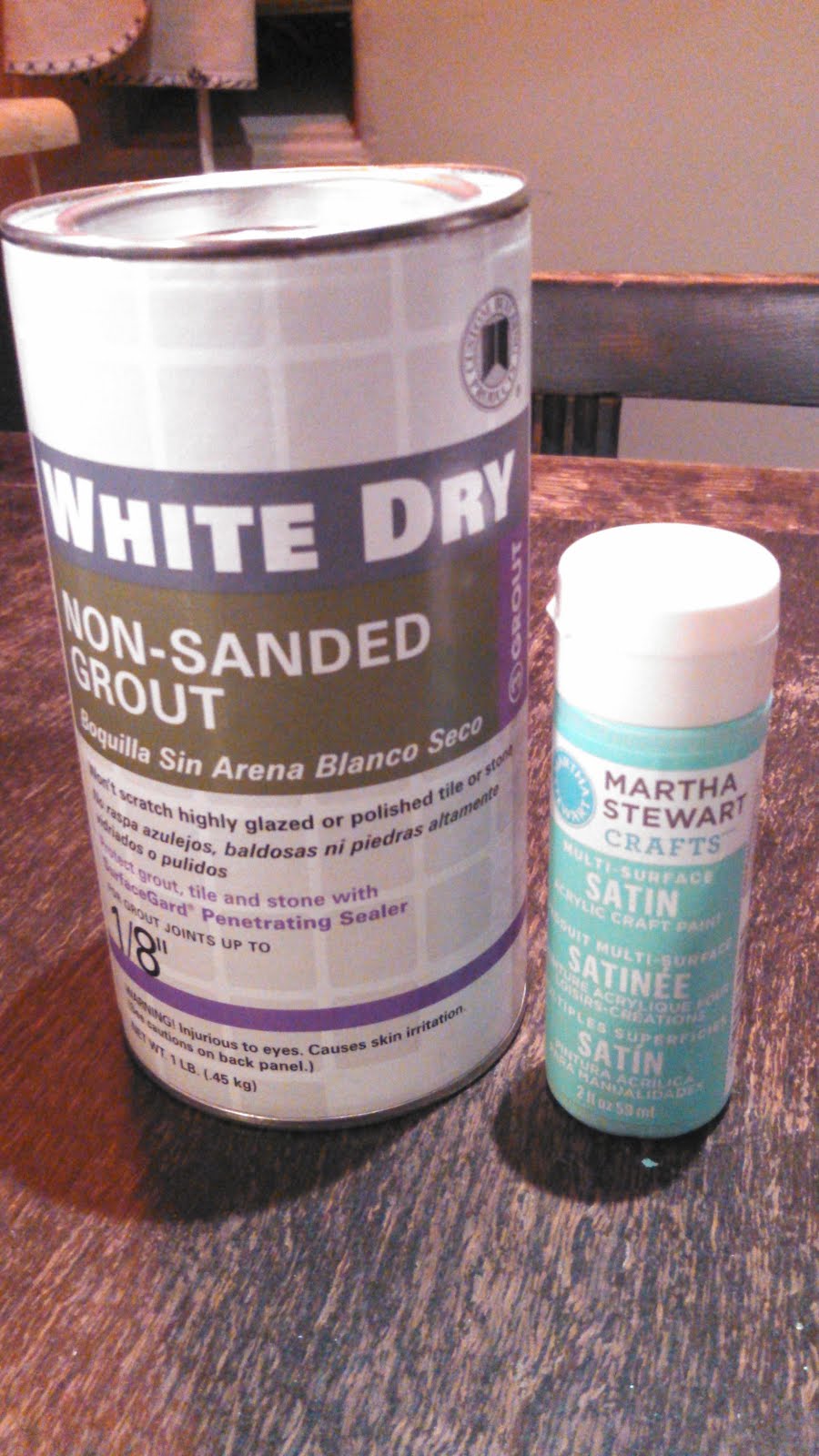
Mix unsanded grout with whatever colour acrylic or latex paint you want in a 1:8 ratio. Paint your intended object. Done.
Alright, I got my excitement back! So I rushed off to my local building supply shop the next day. I expected I would have to buy a huge tub of grout, but actually I got a little thing of it for only $3! And by little, I mean will last me through about 2000+ batches of chalkboard paint.
My paint destination was Michael's, as I did not want to buy giant cans of latex paint from the building supply store. People online seemed to have enough success with acrylic paint, so I went straight to the Martha Stewart section. She actually makes chalkboard paint of her own, and it comes in 4 different colours, but I had decided I wasn't going to cheat. Besides, I wanted a purple, which she didn't offer to me.
After a flurry of grabbing bottles and enduring massive indecision, a bored-to-death boyfriend, and a second and third trip back to the store, I ended up with the colours I wanted. Finally!
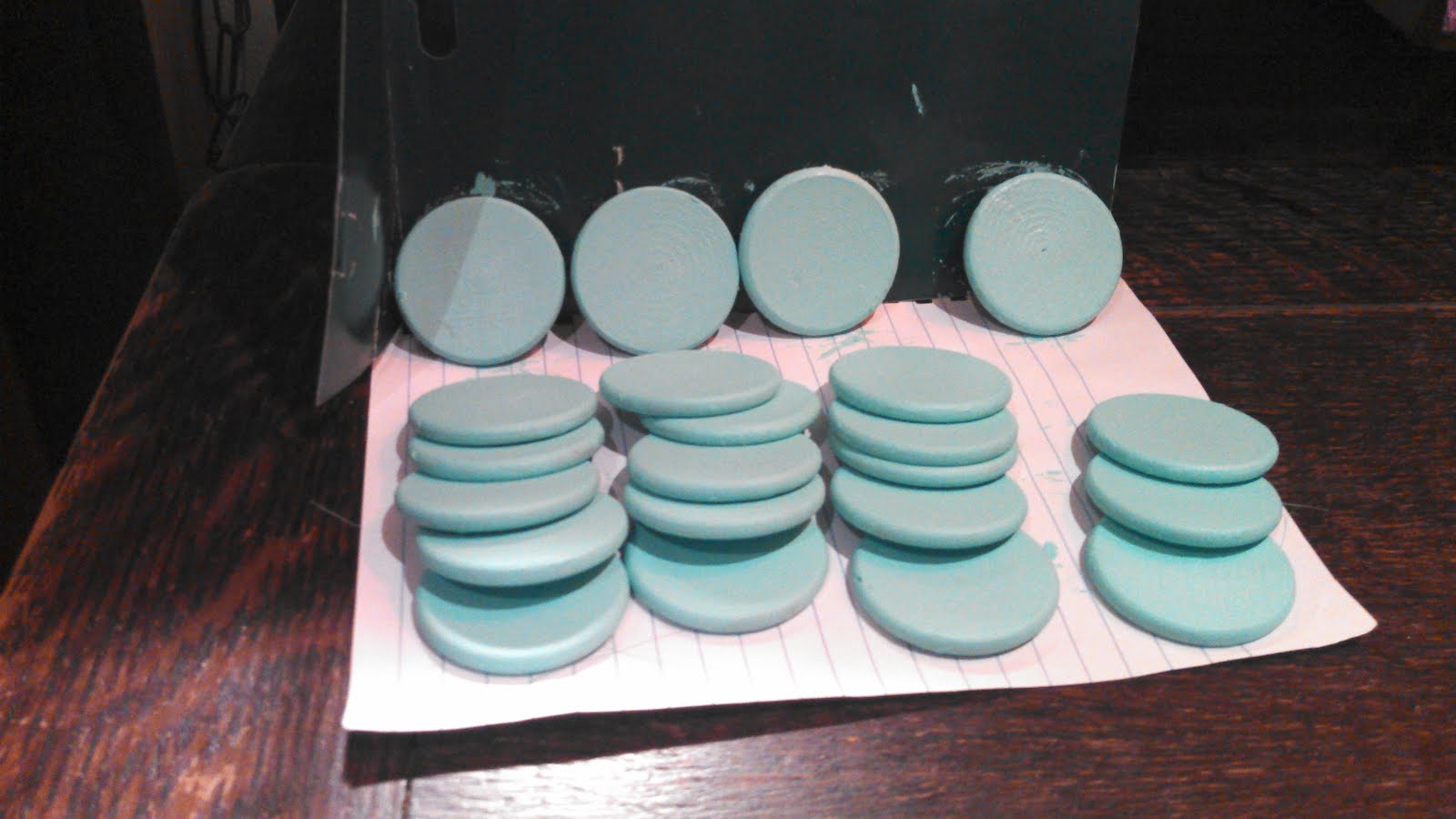
Now I won't bore you with the accounts of my paint jobs, but let me just give you a few photos and tips:
- Mix the grout you are using with a little water to remove the clumps, before mixing with the paint.
- Even if you only need a tiny batch, I would suggest using at least 1/4 tsp. grout to 2 tsp. paint.
  Any less, and my paint was drying and clumping quicker than I could use it.
- Don't get too much paint on your brush when you are painting small objects... should be a given,
  but I had to learn that lesson the hard way. Multiple times.
- I was able to use Martha Stewart's acrylic paint with satin, pearl, and metallic finishes with no
  detrimental effects (although I'm not thrilled about how pearl turned out) Oh, the possibilities!
Any of you been doing anything with chalkboards? Let me know!
This paint is for the project I'm working on, but it deserves a whole post of it's own. If you've been around the right sections of Pinterest (or some other site, I'm sure) you'll notice that people are getting crazy with chalkboard paint.
But what is a girl like me supposed to do when she doesn't want boring black chalkboard paint?
Luckily I had found the answer to this dilemma beforehand. I thought I had seen something on Pinterest about just colouring chalkboard paint, but I went to look at it turned out that I was supposed to just make my own.
Uh-oh, I thought. I don't have time for this right now.
But then I read the directions:
Mix unsanded grout with whatever colour acrylic or latex paint you want in a 1:8 ratio. Paint your intended object. Done.
Alright, I got my excitement back! So I rushed off to my local building supply shop the next day. I expected I would have to buy a huge tub of grout, but actually I got a little thing of it for only $3! And by little, I mean will last me through about 2000+ batches of chalkboard paint.
My paint destination was Michael's, as I did not want to buy giant cans of latex paint from the building supply store. People online seemed to have enough success with acrylic paint, so I went straight to the Martha Stewart section. She actually makes chalkboard paint of her own, and it comes in 4 different colours, but I had decided I wasn't going to cheat. Besides, I wanted a purple, which she didn't offer to me.
After a flurry of grabbing bottles and enduring massive indecision, a bored-to-death boyfriend, and a second and third trip back to the store, I ended up with the colours I wanted. Finally!
Now I won't bore you with the accounts of my paint jobs, but let me just give you a few photos and tips:
- Mix the grout you are using with a little water to remove the clumps, before mixing with the paint.
- Even if you only need a tiny batch, I would suggest using at least 1/4 tsp. grout to 2 tsp. paint.
  Any less, and my paint was drying and clumping quicker than I could use it.
- Don't get too much paint on your brush when you are painting small objects... should be a given,
  but I had to learn that lesson the hard way. Multiple times.
- I was able to use Martha Stewart's acrylic paint with satin, pearl, and metallic finishes with no
  detrimental effects (although I'm not thrilled about how pearl turned out) Oh, the possibilities!
Any of you been doing anything with chalkboards? Let me know!
Subscribe to:
Posts (Atom)